
University of Minnesota
Building disability accommodations training that exceeded accessibility standards — with input from 60 stakeholders across the institution
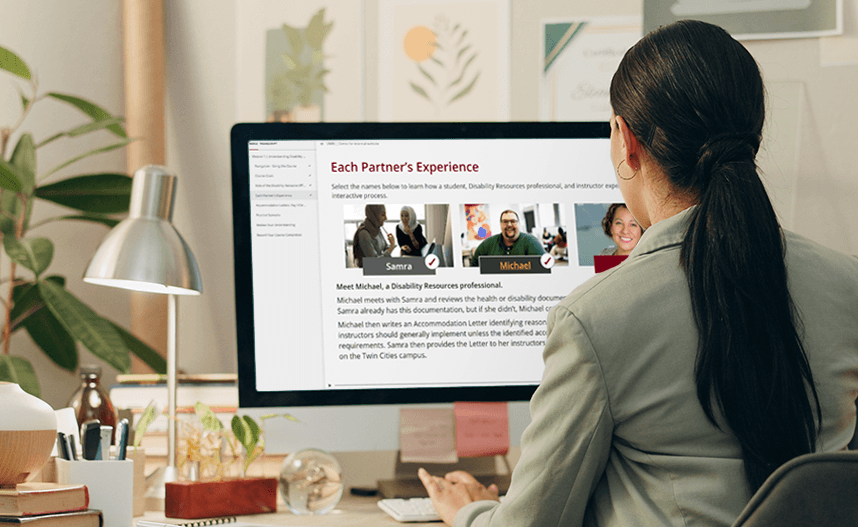
Accommodations training that needed to be a model of the thing it taught
The University of Minnesota needed training on disability accommodations — not as a box-checking compliance exercise, but as a genuine effort to improve how faculty and staff support students with disabilities. More than 60 stakeholders had perspectives that needed to be incorporated: disability services staff, faculty, administrators, legal counsel, students with disabilities, and accessibility advocates.
The training itself needed to be a model of accessibility. Building a course about disability accommodations that wasn’t fully accessible would undermine the entire message. The university didn’t just want to meet WCAG standards — they wanted to exceed them.

Structured stakeholder engagement and accessibility-first design
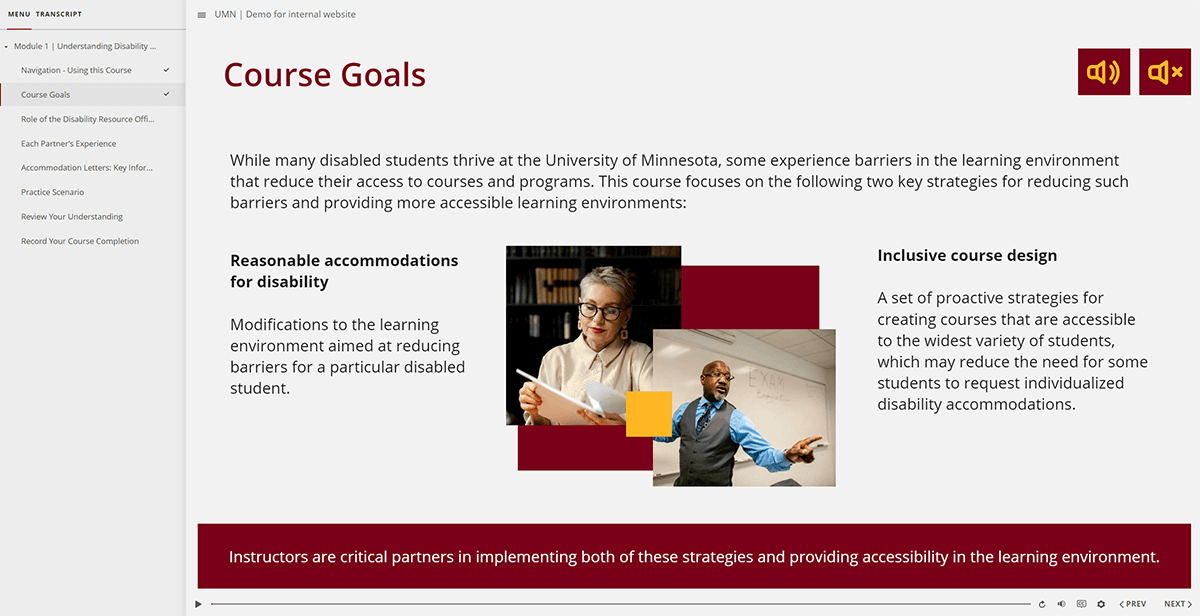
Structured stakeholder process
Rather than collecting feedback from 60 people simultaneously, the input was organized into phases and groups — ensuring every perspective was heard without the review process becoming unmanageable.
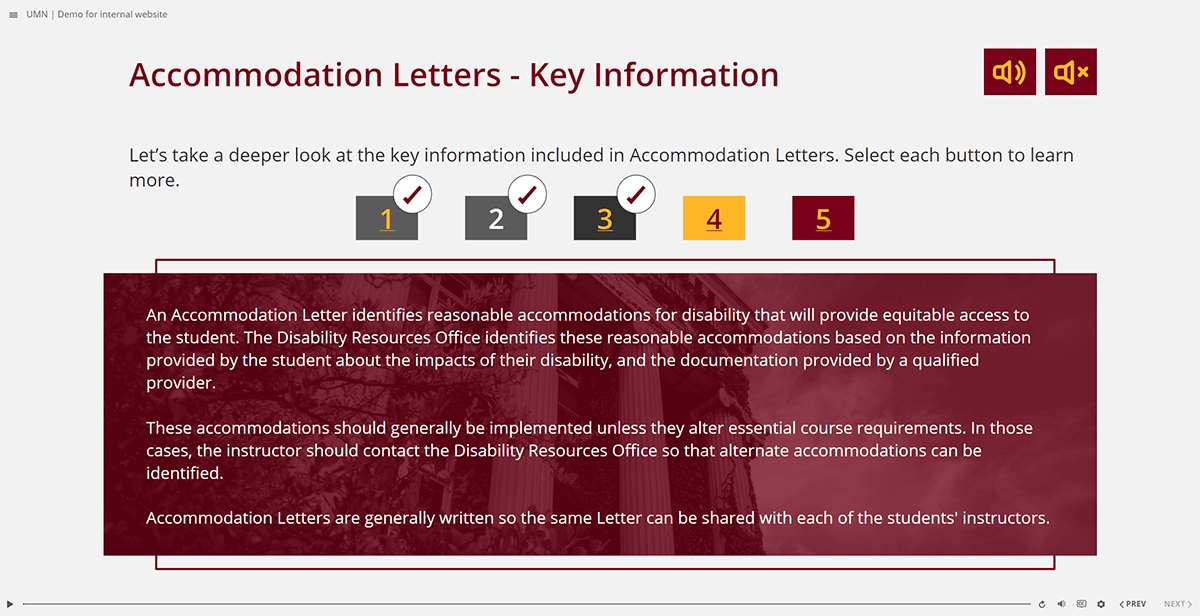
Real scenarios, role-based paths
The course was built around real scenarios faculty and staff encounter: receiving accommodation letters, modifying assignments, navigating conversations with students. Modular design let the university assign different sections by role.
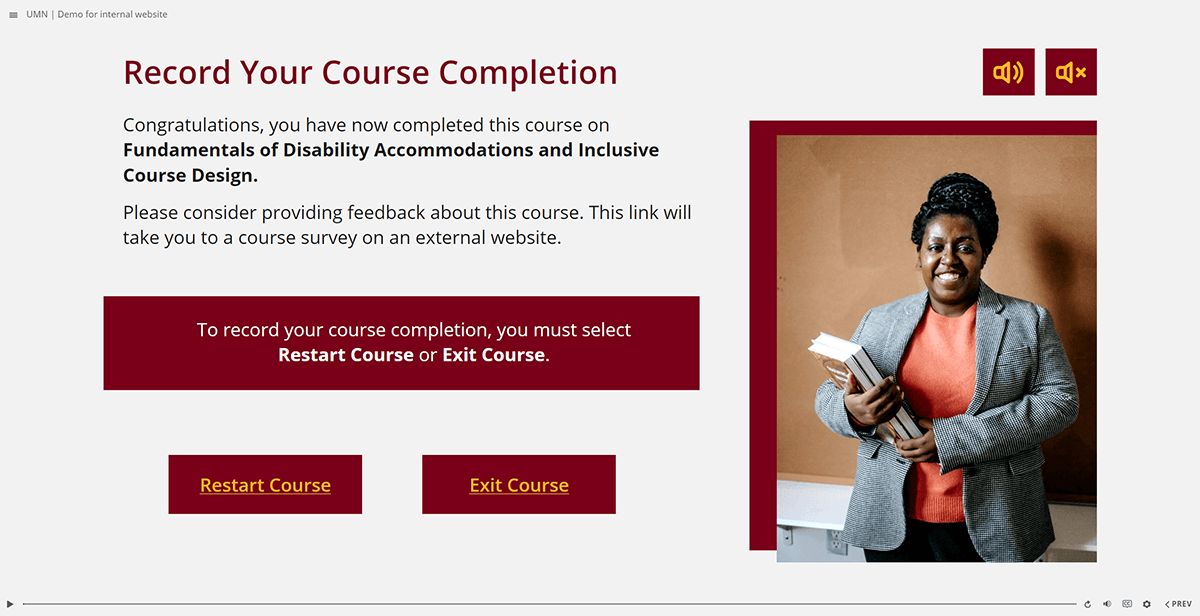
Accessibility as a design constraint
Every interaction, media element, and navigation pattern was designed from the start to exceed WCAG standards. Assistive technology users tested and validated the experience throughout development.
See the accommodations training in action


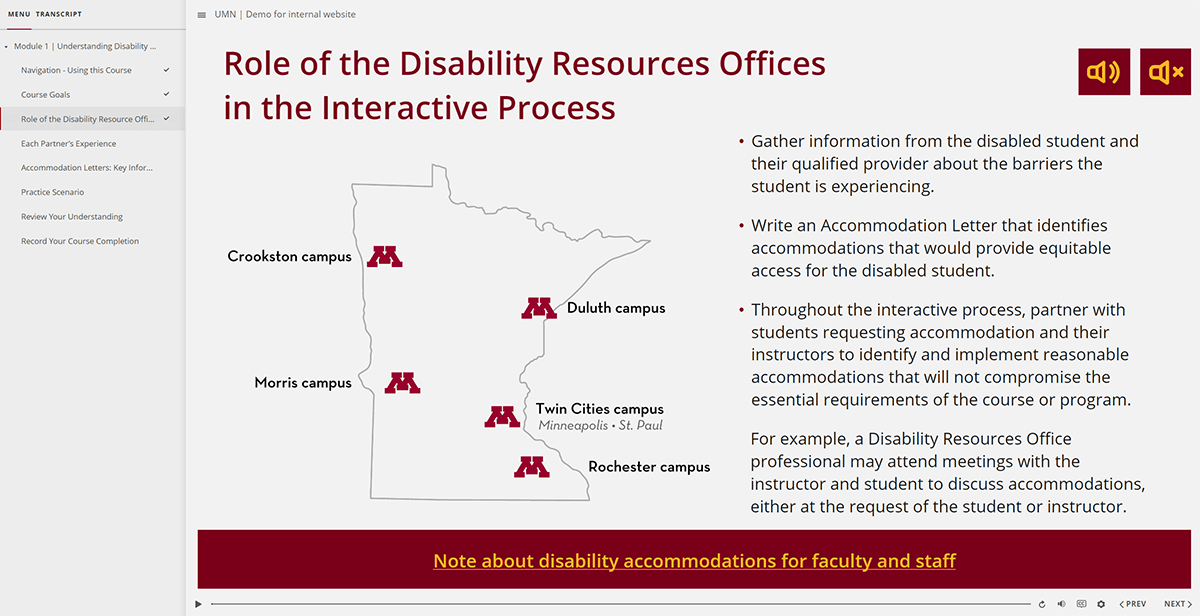
This project wasn’t just about ticking boxes — it was about pushing boundaries.
Accessibility without compromise
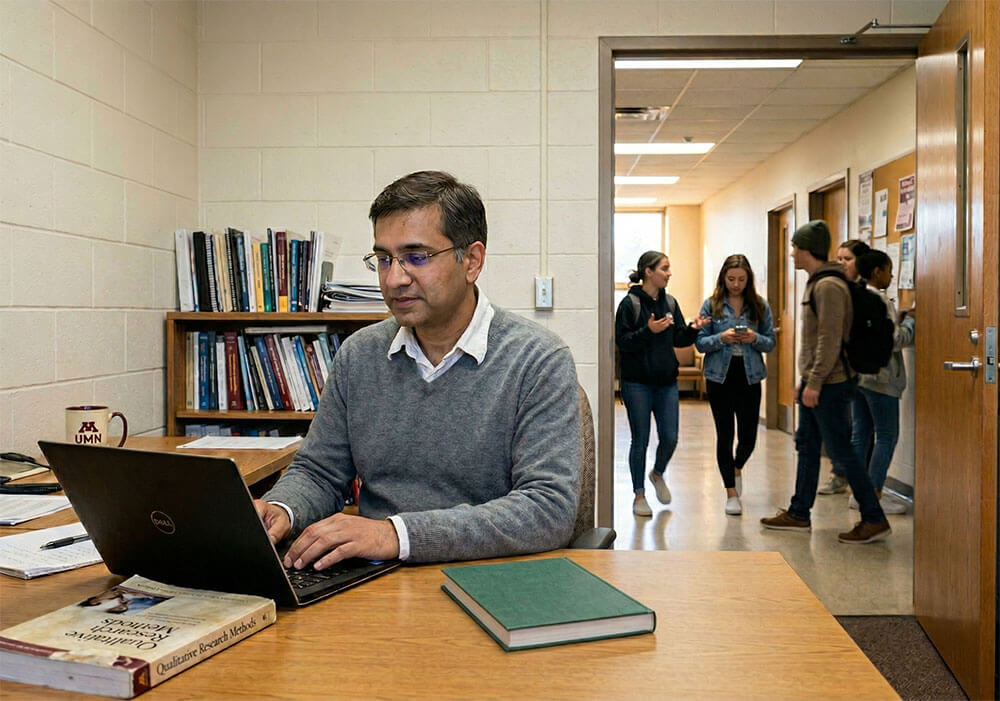
We set a new standard for inclusive design — exceeding WCAG requirements, meeting strict legal standards, and ensuring every one of the hundreds of images reflected the diversity the client expected.
Agility at every turn
Our designers adapted quickly to the project’s unique demands, updating processes in real time as requirements evolved — delivering exceptional results without missing a beat.
Outcomes
About the University of Minnesota
Not-for-Profit / Higher Education
The University of Minnesota is one of the most comprehensive public research universities in the United States, serving tens of thousands of students across multiple campuses. The university’s Disability Resource Center supports students with disabilities and works to ensure accessible, equitable learning experiences across the institution.
For more information about the University of Minnesota, visit their website.

Explore more eLearning projects

WSP
Consistent bilingual training at scale
A global engineering firm modernized 40+ courses with full WCAG accessibility compliance.


Beacon of Light
Capturing institutional knowledge before it was lost
A not-for-profit preserved critical expertise through video-based knowledge capture.
Hypnobabies
Certification curriculum redesigned for online delivery
A certification program redesigned their entire curriculum for online delivery while maintaining quality and personal touch.
Ready to start your eLearning project?
Tell us what you’re working on. We’ll give you an honest read on whether we can help — and what it would take.